
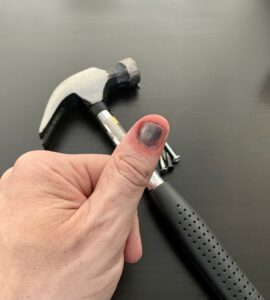
After whacking your thumb with a hammer or stubbing your toe on the bed frame, what’s the first thing you naturally do….after shouting out some colourful words? You grab it, squeeze it, or rub it to make it feel better, don’t you? We all naturally seem to know this pain-reducing “hack.”
What you may not realize is that this same pain-relieving “hack” is happening throughout your entire body all the time. Even more fascinating is that your spine plays the central role in controlling and modulating pain signals across your entire body.
Let’s quickly look at how the body’s “pain gate” works and why spinal health matters so much.
How the Pain Gate Works
Inside the spinal cord is a neurological “gate” that helps control whether or not pain signals reach the brain. Non-painful sensations — like the signals sent by rubbing a stubbed toe or squeezing a sore thumb — activate large, fast-moving nerves that help block the slower pain signals of the injured toe or thumb from getting through. In other words, these faster signals can get to the gate before the pain signals and they “close the gate” on the pain so that sensation can’t get through.
This built-in system is one of the reasons we’re able to move through life without constantly being distracted by pain.
Let’s be very clear. Pain serves a critical purpose in protecting us through warning signals that feel terrible but get our attention so we take action to avoid a greater harm to ourselves.
Thankfully, pain signals travel through small, slow nerves. In fact, only about 10% of your nerves are capable of carrying pain signals.
The other nerve traffic is made up of non-pain signals related to movement, balance, alignment, joint motion, and pressure. These signals travel extremely fast — up to 300 miles per hour — allowing them to reach the spinal cord first and help shut down incoming pain signals.
What Does This Have to Do With Your Spine?
Everything.
Researchers have shown that over 90% of the above-mentioned non-pain signals entering the spinal cord and brain come from the spine itself — particularly from the millions of mechanoreceptors (nerve endings) found within the spinal joints. These are what chiropractic adjustments stimulate and optimize.
Even right now, your body is constantly producing pain signals from pressure, strain, movement, and daily physical stress. Most of the time, you don’t notice them because healthy spinal joint function is continuously helping close the pain gate.
This is why spinal health matters so much.
When spinal joints lose their proper alignment or mobility due to the injuries, stresses and strains of daily life, those important non-pain signals decrease making you more susceptible to local or generalized sources of pain. The pain gates remain open and you feel more pain. Here’s the good news: by restoring spinal function and alignment, the nervous system’s built in pain blocking measures, such as the ‘pain gates’ can be utilized to do their job in modulating and dampening pain naturally.
This is where the specific scientific chiropractic adjustment does what only it can do. It restores the proper performance of the joint by stimulating the millions of nerve endings in the joint(s) to send trillions of messages into the spinal cord which closes the pain gates.
These messages travel on to the brain to inform the brain of what’s going on in the joint. Now the brain, having been updated on the current state of affairs in the spine can respond more accurately to start correcting any areas of dysfunction in the joint, supporting muscles and tissues and optimizing performance. This optimized performance includes the ability to more easily send pain inhibiting signals to the spinal cord and brain for days after the adjustment. Wow!!
Chiropractic Care and Natural Pain Relief in Ottawa
If you’re struggling with back pain, neck pain, sciatica, headaches, or ongoing tension, restoring healthy spinal function may help your nervous system better regulate pain — without relying on medications that do nothing to restore true functional health.
At Ascension Chiropractic, we provide spinal corrective chiropractic care for families and individuals in Downtown Ottawa and surrounding neighborhoods. Every new patient visit begins with a complimentary consultation to determine whether chiropractic care is the right fit for their health concerns.
Reach out to us today!
Dr. Derek Haughton
Frequently Asked Questions About Chiropractic Care, Pain Relief, and the Spine
How does the spine help control pain?
The spine contains millions of specialized nerve receptors that constantly send information to the brain about movement, position, and joint function. These signals help regulate how pain signals are processed through the nervous system and can naturally reduce the amount of pain you experience.
What is the Gate Control Theory of pain?
The Gate Control Theory explains how non-painful nerve signals can reduce or block pain signals before they reach the brain. Activities such as rubbing an injured area, moving a joint, or receiving a chiropractic adjustment can stimulate these non-pain pathways and help decrease pain perception.
Why does rubbing an injury make it hurt less?
Rubbing an injured area activates large sensory nerves that send signals to the spinal cord faster than pain signals. These sensory signals can help “close the gate” on pain signals, reducing the amount of pain information reaching the brain.
Can chiropractic adjustments help reduce pain naturally?
Research suggests that chiropractic adjustments stimulate important nerve receptors within spinal joints, increasing sensory input to the nervous system. This may help improve the body’s natural pain-modulating mechanisms while restoring healthy spinal function.
What are mechanoreceptors and why are they important?
Mechanoreceptors are specialized nerve endings found throughout the body, especially within the spinal joints. They detect movement, position, pressure, and alignment, sending vital information to the brain that helps regulate posture, balance, coordination, and pain control.
Can poor spinal function contribute to pain?
When spinal joints lose normal motion or alignment, the nervous system may receive less sensory information from those joints. This can affect how the brain processes movement and pain, potentially contributing to discomfort, stiffness, and reduced function.
How does chiropractic care affect the nervous system?
Chiropractic adjustments restore movement to restricted spinal joints and stimulate nerve receptors that communicate with the brain. This increased communication helps the nervous system better coordinate movement, posture, and natural pain regulation.
Can chiropractic care help with back pain in Ottawa?
Many people seek chiropractic care for back pain, neck pain, headaches, sciatica, and muscle tension. A thorough examination can help determine whether chiropractic care may be appropriate for your specific condition.
Does chiropractic care help with neck pain and headaches?
Spinal dysfunction in the neck can contribute to muscle tension, reduced mobility, and headaches. Chiropractic care focuses on restoring proper spinal function, which may help reduce these symptoms in many patients.
Is chiropractic care a drug-free approach to pain relief?
Yes. Chiropractic care focuses on improving spinal function and nervous system communication rather than masking symptoms with medication. Many people choose chiropractic care as part of a natural approach to health and pain management.
How do I know if I should see a chiropractor?
If you are experiencing recurring back pain, neck pain, headaches, sciatica, poor posture, stiffness, or decreased mobility, a chiropractic assessment may help identify whether spinal dysfunction is contributing to your symptoms.
Where can I find a chiropractor in Downtown Ottawa?
Ascension Chiropractic provides spinal corrective chiropractic care for individuals and families in Downtown Ottawa and surrounding communities. New patients can begin with a complimentary consultation to determine whether chiropractic care is right for their health goals.